














International and multilingual SEO consulting

International SEO Consultant for Your Next Markets

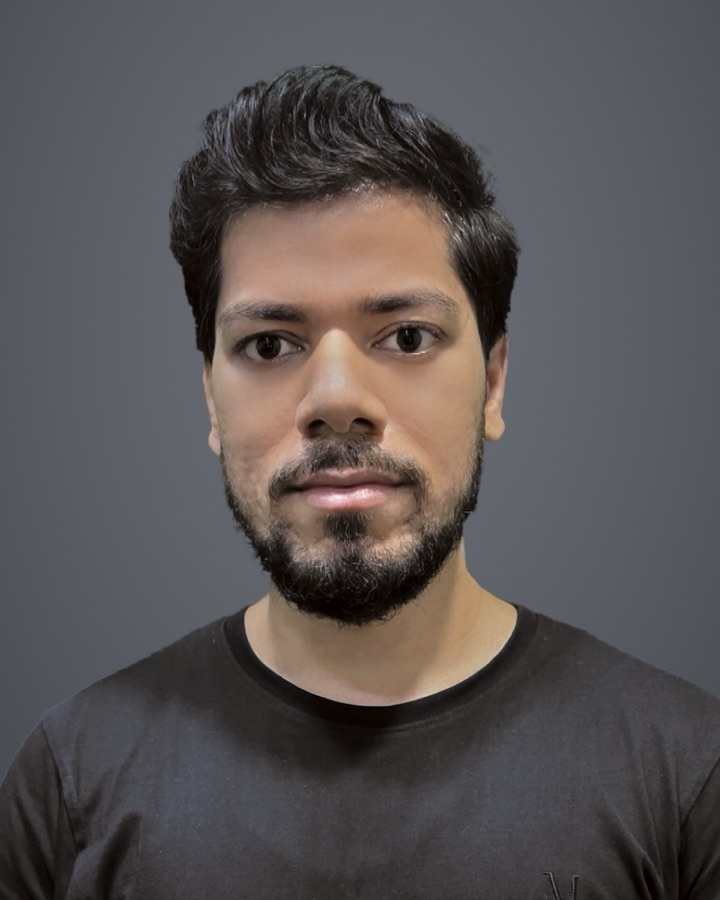
As your international SEO consultant, I help you choose which countries and languages to target first, settle your URL structure and hreflang rules, and set localization standards before you spend on translation. I'm Vikash Kumar Pal, an SEO consultant in New Delhi and the co-founder and CEO of improveFX. Your developers and translators build the plan with my review, or my improveFX team builds it for you.

67Kmonthly visitors for RMC Education, from 500 in a year, on country and university pages
478Kmonthly visitors for Monica.im after duplicate URL and canonical fixes
50+startups and global brands I've worked with

Brands I have helped grow in healthcare, ecommerce, real estate, education and more.

01The problem

Expansion Stalls When Search Is Planned Last

These mistakes get built into a site's structure, which makes them expensive to fix later.

  1. 01

    The wrong version ranks in the wrong country

    Your US page shows up for UK searchers, or the English page outranks the German one in Germany. Buyers land on the wrong prices, currency, and delivery terms, and many leave.

  2. 02

    Translation budget spent on words nobody searches

    Pages were translated from an English keyword list, so they use your team's terms, not the ones local buyers type. They get indexed, then bring almost no traffic.

  3. 03

    A structure decision that is costly to undo

    Country domains, subdomains, or subfolders were picked by a platform default or by IT alone. Changing later means new redirects, new hreflang sets, and months of reprocessing per market.

  4. 04

    Hreflang that fails without warning

    Missing return links, invalid region codes, or canonicals pointing at the English page make Google ignore your annotations. Nothing looks broken in the CMS, so it can run for a year.

Recognize one? Send me your domain and target countries, and I'll say which to fix first.

Get a proposal
Vikash Kumar Pal, SEO consultant and co-founder of improveFX
Vikash Kumar PalSEO consultant · Co-founder & CEO, improveFX
Who you work with

The Decisions That Are Hard to Reverse Come From Me

On an international engagement, I personally handle what you can't easily undo: market scoring, the URL structure decision, the hreflang specification, and review of the first localized pages in each market. Full crawls and keyword pulls per country go to SEO specialists on my team at improveFX, and I check their work before you see it. Native-language review stays with your translators or local staff. I've spent seven years in SEO and worked with 50+ startups and global brands; my SEO approach shows the method.

  • 2019doing SEO since
  • 50+brands helped in India, the US and beyond
  • 25+specialists on the improveFX team
  • 6certifying bodies, including Google, Semrush and HubSpot
02Quick check

Check How Urgently Your Expansion Needs Advice

Six yes-or-no questions about your own site and plans. Your score points to the next step.

  1. 01
    Do you plan to launch a new country or language within the next six months?
  2. 02
    Is the choice between a country domain, a subdomain, and a subfolder still open?
  3. 03
    Does Search Console show impressions from countries where you have no localized pages?
  4. 04
    Does your site redirect visitors automatically by IP address or browser language?
  5. 05
    Were your translations written from an English keyword list rather than local research?
  6. 06
    Do you sell, or plan to sell, where Baidu, Naver, or another local engine is widely used?
03What changes

What Changes When the International Plan Comes First

From the first decision to a market that runs without me.

A market order your leadership can defend

Each candidate country is scored on local search demand, existing traction, competition, business readiness, and localization cost, so the first launch goes where the data points, not where the loudest stakeholder wants.


02

One structure, decided once

Your URL architecture is chosen with your developers against your CMS, hosting, and legal entities, then documented, so every future market follows the same pattern.

03

The right page in each country's results

Hreflang, canonicals, and genuinely localized content work together, so searchers in each country land on the version with their currency, spelling, and delivery terms.

04

A launch process your team runs alone

Translators get keyword briefs, developers get templates that output valid annotations, and the next market launches from a checklist.

04What is included

What Does International SEO Consulting Include?

Five areas, each producing a document your translators and developers can build from.

Market selection and demand sizing

A ranked list of countries and languages, based on local search demand, the traction you already have, and the cost of competing in each.

You receiveA market-priority scorecard and a recommended launch order

See the 6 checks
  • Search Console clicks and GA4 conversions by country
  • Keyword research per market, in the local language
  • Who ranks today: local brands or global ones
  • The dominant search engine in each market
  • Shipping, payments, and support readiness
  • New language or regional variant (en-GB vs en-US)

URL architecture and platform decision

A written choice between country domains, subdomains, and subfolders, made with your developers against your CMS, hosting, and legal setup.

You receiveAn architecture decision record with URL patterns per market

See the 5 checks
  • ccTLD, subdomain, and subfolder trade-offs for your case
  • URL patterns and slug language per market
  • Platform support: Shopify Markets, WPML, Polylang, Webflow Localization
  • Language selector design
  • Redirect rules that let Googlebot reach every version

Hreflang and canonical specification

Rules for every template, so each page lists its alternates, gets return links, and never canonicalizes to another language.

You receiveAn hreflang spec with developer tickets and acceptance tests

See the 6 checks
  • ISO 639-1 language and ISO 3166-1 region codes
  • Return links on every alternate
  • Self-referencing canonical on each version
  • x-default for selectors and unmatched visitors
  • Annotations only on indexable, 200-status URLs
  • Crawl of each new market on staging

Localization governance

Guidelines and reviews that turn translation into localization, matching how local buyers search and decide.

You receiveA localization playbook, keyword briefs per market, and first-batch reviews

See the 5 checks
  • A local keyword brief per priority page
  • Rules for titles, headings, and URL slugs
  • Currency, units, spelling, and legal notes
  • Terms not to translate literally
  • Native-speaker review before publishing

Launch QA and reporting by market

Checks before and after each market goes live, then reporting by country, so you see which markets earn their budget.

You receiveA launch checklist, a post-launch review, and a market-level report

See the 5 checks
  • Indexing of each market folder or domain
  • Hreflang errors from a full crawl
  • Search Console filtered by country and page
  • Visitors landing on the wrong version in GA4
  • AI answer citations for each market's key questions
A note from VikashSEO consultant · Co-founder & CEO, improveFX

Bring your list of target countries to the call.

Share your domain and the markets you're weighing when you book. I'll check your country data and hreflang first, so the call goes straight to decisions.

  • Your current setup, checked. Which versions are indexed and which signals conflict.
  • A first view on market order. Where you already have traction, and where you don't.
  • An honest fit. If you need hands rather than advice, I'll say so.
Get a proposal
05How I work

How I Build Your International SEO Strategy, Stage by Stage

The order matters: structure depends on the markets you pick, and hreflang rules depend on the structure.

  1. 1Week 1

    Country data and access

    We agree target markets, revenue goals, and constraints. Your team shares Search Console, GA4, and Bing Webmaster Tools for every property, plus your CMS and translation workflow.

    OutputTarget countries and a baseline for each

  2. 2Weeks 1-2

    Current-state audit

    I crawl every language version, extract hreflang and canonicals by template, and test redirects and the language selector as Googlebot and as a visitor.

    OutputAn issue log sized by affected traffic

  3. 3Weeks 2-4

    Market research and scoring

    Keyword research in each target language, a review of who ranks per market, and input from your sales or support team.

    OutputA market-priority scorecard

  4. 4Weeks 3-5

    Architecture and hreflang spec

    I write the URL structure decision and per-template rules, then walk your developers through them before sign-off.

    OutputA hreflang spec and build tickets

  5. 5Week 6 onward

    Roadmap, playbook, and launch QA

    A 90-day roadmap, the localization playbook, and a pre-launch crawl, then a review of indexing and rankings per market after launch.

    OutputA launched market and a monthly market report

06What it is worth

Estimate What One New Market Could Be Worth

Enter your own numbers for one target country.

What that growth would be worth

0extra revenue a year
Extra visitors a month
0
Extra leads or sales a month
0
Extra revenue a month
0
Talk through a market with me

Arithmetic on your inputs, not a forecast. Size the share from local-language keyword research, not translated volumes.

07Choose your structure

ccTLD, Subdomain, or Subfolder: Which Should You Choose?

Pick the structure your organization can maintain for years. Google compares the options in its multi-regional sites guide; the last column is my call.

Source: Google Search Central, plus my recommendations.
StructureExampleStrengthsTrade-offsWhen I recommend it
Country-code domain (ccTLD)example.deClearest country signal; server location doesn't matterEach domain builds authority alone; costly; targets one countryBrands with local entities and a team per country
Subdomainde.example.comMarkets can run on separate hosting or platformsVisitors can't tell whether "de" means German or GermanyMarkets that need their own CMS or legal separation
Subfolderexample.com/de/One host to maintain; every market shares one domainWeaker country signal in the URL; one release processMost businesses entering their first new markets
URL parameterexample.com/?loc=deQuick to addHard to segment; Google marks it not recommendedNever, for indexable market pages
08In depth

International SEO Strategy in Depth: Signals, Hreflang, and AI Search

The three topics teams ask me about most, each with a checkable source.

01How Google decides a page's language and countryFrom the visible content and a set of local signals, not from a Search Console setting.

Google identifies language from the words on the page, not lang attributes or the URL, so an English page inside a /fr/ folder still counts as English. Country targeting comes from hreflang, a country domain, local addresses and phone numbers, local currency, and links from local sites.

Google has deprecated the Search Console International Targeting report, so structure and hreflang carry that job. Location-based redirects are the quiet risk; I recommend a dismissible banner suggesting the local site.

02Hreflang mistakes that make Google ignore your tagsMost failures are silent: the tags exist, but they don't count.

The errors I find most often on multi-country audits:

  • Missing return links. The US page points to the UK page, but not back.
  • Invalid codes. Britain is "en-GB"; "UK" or "EU" has no effect.
  • Canonical conflicts. A German page canonicalized to the English one asks Google to drop it.
  • Dead ends. Annotations pointing to redirected or noindexed URLs.
  • No x-default for visitors from unlisted countries.

Google treats the HTML, HTTP header, and sitemap methods as equivalent, so I use whichever your platform maintains best and verify it with a full crawl.

03AI answers and non-Google engines in each marketAI answers draw on indexed pages, so a market that isn't indexed properly isn't cited either.

Google says a page needs only to be indexed and snippet-eligible to appear as a supporting link in AI Overviews and AI Mode (AI features and your website). Per market, I add three checks:

  • Local-language answers: passages that answer one buyer question on their own
  • Consistent facts: addresses, currencies, and service areas that match across your site and local profiles
  • Citation tracking: a fixed set of buyer questions, checked monthly in Google and ChatGPT

Some markets also need a different engine in the plan.

09Who it is for

Built for Companies Taking a Working Site Abroad

Where international advice pays back fastest.

First expansion

Businesses entering their first new country

You rank at home and want one or two new markets. We pick them from data, choose a structure that scales, and research keywords in each language before translation starts.

Read my research method
Ecommerce

Stores selling in several currencies

Same-language markets such as the US, UK, and Australia need local prices, spelling, and delivery terms, or the versions read as near-duplicates. On Shopify, Markets generates hreflang, so I review that configuration.

See ecommerce SEO consulting
Enterprise

Large sites with country teams

When country teams publish independently, templates drift and duplicates multiply. I set shared URL and hreflang rules and a review step every market follows.

See enterprise SEO consulting
Migrations

Merging or splitting country sites

Moving country domains into subfolders, or the reverse, changes every URL and hreflang set at once. I own the redirect map, the new annotations, and the launch checks.

Plan a migration with me
10Choosing your support

Who Should Run Your Expansion: Consultant, Agency, or In-House Team?

Each fits a different stage; many companies pair a consultant for strategy with in-house or agency execution.

FactorInternational SEO consultantAgencyIn-house hire
Best moment to bring inBefore a launch, migration, or structure changeOnce the plan is set and pages must shipWhen international search is a permanent channel
Who builds the market pagesYour team or agency, with my reviewThe agency's localization teamThe hire, plus translators per market
Market research depthDeep, per market, at the startVaries; often home-market focusedGrows over time, limited by languages spoken
Cost shapeFixed project or monthly advisoryRetainer that grows with marketsSalary, tools, and translation budget
Main riskSpecs sit unbuilt between launchesTemplates copied across markets unlocalizedOne person's blind spots in every market
11Who does what

Who Owns Each Step of a Market Launch

A typical division for one market launch, with translators and developers in their own columns.

TaskMe (Vikash)Your developersYour content and translation team
Market selectionResearches, scores, and recommendsNoneAdds sales and support insight
URL structureRecommends and documentsConfirms feasibility and buildsNone
Hreflang and canonicalsWrites the spec, checks the releaseImplements in templates or sitemapsNone
Local keyword researchLeads, with native reviewNoneReviews terms and phrasing
Translation and localizationWrites briefs, reviews first batchBuilds language selectorTranslates, localizes, publishes
Launch QACrawls staging and live, signs offFixes flagged issuesCorrects copy issues
12Ways to work together

Ways to Work Together Before, During, and After a Market Launch

Each format ends with written deliverables. I'll recommend one on our call.

13What affects the cost

How Much Does International SEO Consulting Cost?

I don't publish fixed prices, because one new subfolder and ten country domains are different jobs. Five factors set the scope.

Get a scoped proposal

Markets and languages

More effort: several new languages, each needing its own keyword research.

Less effort: one regional variant of a language you already publish.

CMS and market setup

More effort: a custom CMS, a platform per country, or many templates.

Less effort: Shopify Markets or a mature multilingual plugin.

Current state

More effort: live markets with conflicting signals to untangle.

Less effort: a market that hasn't been built yet.

Search engines involved

More effort: markets where Baidu, Naver, or another local engine matters.

Less effort: markets where Google dominates.

Implementation support

More effort: reviewing every ticket and translated page.

Less effort: spot checks on templates and the first pages.

I scope each engagement after a strategy call and a look at your Search Console country data. Audits and market-entry sprints are quoted as a fixed project fee; advisory as a monthly retainer reviewed each quarter.

Get a scoped proposal

What Clients Say About the Work

“Pensions are something people research carefully before they trust anyone with their savings, so for PensionBox, being found on Google is part of earning that trust. Vikash understood this straight away. He and his team worked out what people actually search for when they plan their retirement, then built pages that answer those questions clearly. We now show up for far more of the searches that matter to us, and the reporting has been honest and easy to follow from the start.”
Kuldeep ParasharKuldeep ParasharFounder and CEO, PensionBox
“Patients won't walk into a hospital they don't trust, and they can't trust one they can't find. Vikash helped AkosMD with both. Our pages now rank for the searches patients actually make, which makes our urgent care much easier to find, and online appointments and inquiries have gone up noticeably. That has fed straight into our growth.”
Swaraj SinghSwaraj SinghFounder, AkosMD
“improveFX designed our website and now manages our SEO, Google Ads and Google Business Profile, so all of Momentus's marketing sits with one team. Vikash's team has delivered on every one of those channels. Our search rankings are better, more local inquiries come in, and the ads bring us a steady flow of good leads. Qualified leads are up 210%, and 92% of our keywords are on page one.”
Maureen CappalloMaureen CappalloBroker and founder, Momentus Real Estate Group
15Why work with me

Why Expanding Teams Work With Me

Rules I hold to on every market launch.

01

One market done properly before three done halfway

Launching three half-localized markets at once usually produces three weak sites. I'd rather you prove one market, keep what worked as a playbook, and pick the next from its results.

02

Commitments I can actually keep

Rankings depend on competitors and on the engines themselves, so I don't promise positions. I commit to what I control: hreflang that validates in a full crawl, a readable structure, and a roadmap with owners.

03

Specs from someone who also ships

I run implementation at improveFX, so my specs come with URL patterns, test cases, and the edge cases developers hit on multilingual templates, such as language selectors and currency switchers.

FAQ

International SEO Consulting Questions, Answered

Still have a question? Email or book a strategy call.

What does an international SEO consultant do?

An international SEO consultant plans how one business ranks in several countries or languages: which markets to enter first, how to structure the site, how to signal language and region, and how to keep localized content accurate. I advise and review while your team builds, or my improveFX team implements it.

How much does international SEO consulting cost?

It depends on scope, so I quote each engagement after a strategy call rather than publishing a price list. The biggest drivers are how many new languages need their own keyword research and how much implementation review you want. A one-market sprint on a subfolder is a far smaller job than auditing ten country domains.

How long does international SEO consulting take to show results?

A fixed-scope audit, specification, or market-entry sprint takes two to six weeks, and advisory runs month to month. Rankings in a properly localized market typically improve within three to six months of launch, and a new subfolder on an established domain usually moves faster than a new country domain.

Which countries should we expand into first with SEO?

Expand first where local-language search demand, your existing traction, and business readiness line up, not simply into the largest economy. I score each candidate on demand, Search Console and GA4 data by country, who ranks today, shipping and support readiness, and localization cost. A smaller market you can fully serve usually beats a bigger one you can't.

How do you avoid duplicate content across countries?

Give every market version localized main content, connect the versions with reciprocal hreflang, and keep each page canonical to itself. Google treats localized versions as duplicates only when the main content stays untranslated, so same-language markets such as en-US and en-GB need local prices, spelling, and delivery terms.

Can you work with our translation or localization team?

Yes. Your translators get a keyword brief per market, rules for titles, headings, and URL slugs, and terms not to translate literally. I review the first batch of localized pages in each market, so the rules are tested on real content before your team scales them.

Should we machine-translate our website for new markets?

Machine translation can produce a usable first draft, but publishing it unreviewed at scale is risky. Google's spam policies list automated translation that adds little value under scaled content abuse. I allow machine drafts only with native-speaker editing, local keyword research, and localized prices and terms.

How do you split work with our developers and current agency across markets?

I take the decisions that are costly to reverse, such as market order, structure, and the hreflang spec. Your developers build them, and your agency or translators produce the pages. We write that split down at kickoff, then I review tickets and translated pages in your tools and read results by market with you.

How do you handle time zones and confidentiality?

I sign your NDA before you share data, and I work from New Delhi (UTC+5:30) over video calls and shared documents. That timing suits multi-market teams: Asia-Pacific and European colleagues overlap my day, and US teams usually meet in their morning. Several of my published case studies, such as ActivePILOT and BNCL Law Firm, are US companies.

How soon can you start before a market launch?

Usually within days to a few weeks of agreeing scope. For a migration or a new-market launch, bring me in before the build, while the structure can still change cheaply and every market can follow one pattern.

Let's talk

Tell me where you want to sell next, and I'll tell you how to structure it

Share your domain, the countries you sell to now, the ones you're weighing, and your CMS.

  • A look at your country and language setup before we talk
  • A call scheduled across your time zone and mine
  • A written proposal with format, deliverables, and timeline
Vikash Kumar PalEvery message is read and answered by me.
What I keep and why

I use your name, email, phone number, company, website, the service you need and your message to reply to you and manage your enquiry. With them I keep the page you sent it from, your device's IP address and browser details, to spot and block spam, and a record that you agreed, to show your consent. I keep all of this for 24 months after our last contact, then delete it. To withdraw your consent, send one email to hello@vikashkumarpal.com. Write to the same address to see, correct or delete your details sooner, or with a question or complaint. If my reply does not resolve your complaint, you can take it to the Data Protection Board of India. For this notice in Hindi or another language of the Eighth Schedule, email me and I will send a translation.

Talk to Vikash For international SEO consulting